Ticks vs Fleas: Key Differences, Bites, Identification & Prevention
Ticks vs. Fleas: What’s the Difference?
Ticks are eight-legged arachnids that crawl onto people and animals, attach to the skin, and feed on blood. Fleas are six-legged insects that jump onto hosts, take blood meals, and can reproduce inside homes. Both can bite humans and pets, but their appearance, behavior, habitats, life cycles, and health risks are different.
If you find a small dark bug on your dog or notice unexplained bites after spending time outdoors, identifying the pest is an important first step. A tick picked up near a wooded trail calls for a different response than fleas developing in your pet’s bedding.
For homeowners in Weston, Massachusetts, recognizing these differences is especially useful. Ticks may be encountered in grassy yards, shaded landscapes, woodland edges, and outdoor recreation areas. Fleas can become a household concern when pets or other animals introduce them indoors.
This guide explains how to distinguish ticks and fleas, recognize common signs, understand possible health risks, and choose practical prevention methods. You’ll also learn when professional tick control may be appropriate for your property.
Difference Between Ticks and Fleas: Quick Comparison
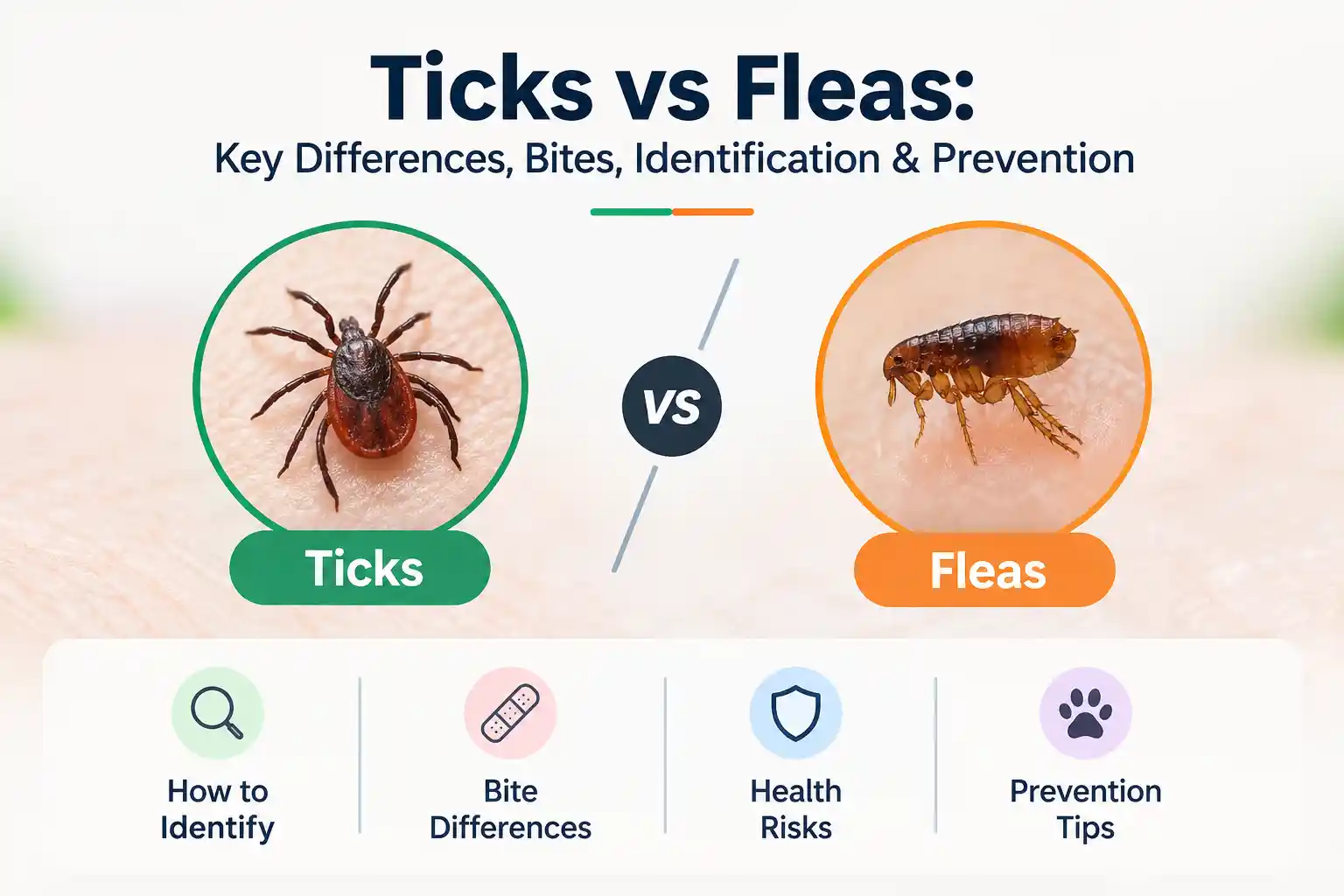
The biggest difference between ticks and fleas is how they move and feed. Ticks crawl and attach to a host for a prolonged blood meal, while fleas jump and feed repeatedly.
Although both are blood-feeding pests, they belong to different biological groups. Ticks are arachnids, related to spiders and mites. Adult ticks have eight legs, and their bodies can expand considerably after feeding. Fleas are insects with six legs, a narrow body shape, and enlarged hind legs that allow them to jump. These characteristics provide useful identification clues, but smaller life stages can be harder to recognize.
Ticks vs. Fleas Comparison Chart
| Feature | Ticks | Fleas |
|---|---|---|
| Pest classification | Arachnids | Insects |
| Number of adult legs | Eight | Six |
| Typical appearance | Oval and flattened when unfed | Narrow, flattened from side to side |
| Common color | Brown, reddish-brown, or black, varying by species | Dark brown to reddish-brown |
| Movement | Crawl | Jump and crawl |
| Wings | No | No |
| Feeding | Attach for extended periods | Take repeated blood meals |
| Common hosts | Humans, dogs, cats, deer, rodents, and other animals | Dogs, cats, wildlife, and sometimes humans |
| Common habitats | Tall grass, wooded areas, shrubs, and leaf litter | Pets, carpets, rugs, furniture, and bedding |
| Indoor establishment | Less common, except for certain species | Possible and often persistent |
| Life cycle | Egg, larva, nymph, adult | Egg, larva, pupa, adult |
| Main concerns | Tick bites and tick-borne illnesses | Itching, allergic reactions, parasites, and infestations |
| Main control focus | Outdoor habitat management and personal protection | Pets, indoor environment, sanitation, and follow-up |
What Do Fleas and Ticks Look Like?
Ticks and fleas may appear similar without magnification, particularly when you find a tiny dark speck on clothing, skin, or animal fur. Their body shape, legs, and movement offer the most useful clues.
What Does a Tick Look Like?
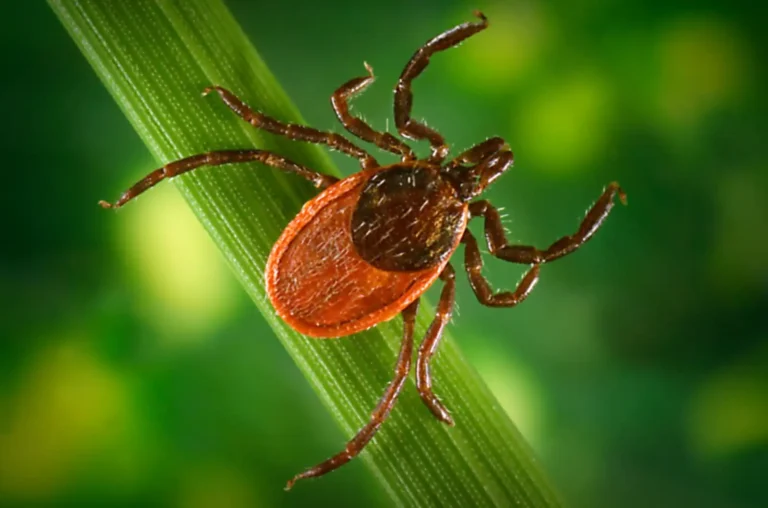
An unfed tick usually has a small, flattened, oval body. Its color depends on the species, sex, and developmental stage. Some ticks appear reddish-brown, while others are dark brown or have noticeable pale markings. Adult ticks have eight legs. However, tick larvae have only six legs, which can make immature ticks more difficult to distinguish from insects. Ticks also have specialized mouthparts that allow them to attach to the skin and feed.
After taking a blood meal, a tick may become noticeably larger. This is called an engorged tick. Its swollen body can appear rounded and grayish or lighter than before feeding. Because ticks do not jump or fly, they reach hosts through physical contact with vegetation, animals, clothing, or nearby surfaces.
What Does a Flea Look Like?
Adult fleas are small, wingless insects with narrow bodies and strong hind legs. Most appear dark brown or reddish-brown. Their bodies are compressed from side to side, allowing them to move through animal fur. Unlike an attached tick, a flea may disappear quickly when disturbed. Fleas can jump from a surface onto an animal or move through fur, making them challenging to catch. If you see several tiny insects rapidly moving through your pet’s coat, fleas may be responsible.
How to Identify Flea Dirt
Another important clue is flea dirt, the dark waste produced by feeding fleas. Flea dirt often resembles black pepper or tiny dark specks. You may notice it around a dog’s tail base, lower back, neck, or sleeping area.
To investigate suspected flea dirt:
- Collect several dark specks with a flea comb or damp cloth.
- Place them on a wet white paper towel.
- Watch for reddish-brown staining as the material dissolves.
- Check your pet for additional evidence of fleas.
The reddish stain may indicate digested blood in flea droppings. This is a useful screening method, but it is not a definitive medical or pest-identification test. If your pet is scratching excessively or has irritated skin, seek veterinary advice.
Common Types of Ticks and Fleas
Different species can affect different animals, environments, and geographic areas. Knowing which species occur in Massachusetts helps homeowners better understand potential exposure risks.
Blacklegged Tick (Deer Tick)
The blacklegged tick, scientifically known as Ixodes scapularis, is important in Massachusetts because it can transmit pathogens responsible for several tick-borne diseases, including Lyme disease, anaplasmosis, and babesiosis.
Young blacklegged ticks, called nymphs, are very small and can be difficult to detect during routine skin checks. Adult ticks are larger and may be easier to notice, particularly after feeding. Blacklegged ticks are associated with wooded and brushy environments, leaf litter, and areas where suitable wildlife hosts are present.
American Dog Tick
The American dog tick, Dermacentor variabilis, is another species found in Massachusetts. Adult dog ticks may be encountered in grassy environments and can attach to dogs or humans. They are recognized vectors of Rocky Mountain spotted fever and certain forms of tularemia, although disease risk varies by location.
Lone Star Tick
The lone star tick, Amblyomma americanum, has been found in parts of Massachusetts. Adult female lone star ticks are often recognized by a distinctive light-colored spot on their backs. This species can transmit certain disease-causing organisms and is associated with alpha-gal syndrome, an allergy that can develop in some people after particular tick bites.
Cat Flea & Dog Flea
The cat flea (Ctenocephalides felis) is a common flea species affecting household pets in the United States. Despite the name, cat fleas frequently infest dogs and may bite humans when an infestation is present. The dog flea (Ctenocephalides canis) is another blood-feeding insect, though cat fleas are generally encountered more frequently on household dogs.
How Do Ticks and Fleas Move and Find Hosts?
Movement is one of the easiest ways to distinguish these pests. Ticks crawl, while fleas can jump. Their different methods of reaching hosts also explain why they are commonly found in different locations.
How Ticks Find People and Animals
Many hard ticks use a behavior called questing. A questing tick climbs onto grass, leaves, or other low vegetation and extends its front legs. When a person or animal brushes past, the tick grasps the passing host. Ticks do not need to fall from trees to reach people. Encounters often occur closer to ground level or along vegetation. After making contact, a tick may crawl across clothing or skin before finding a suitable attachment site, such as behind the knees, around the waist, under the arms, around the ears, and along the hairline.
How Fleas Reach Their Hosts
Adult fleas respond to environmental signals such as heat, movement, and vibrations. They can jump onto animals and begin feeding. Once adult fleas are present on a pet, their eggs may fall into areas where the animal sleeps or rests. Over time, developing fleas may become distributed across carpets, rugs, furniture, and pet bedding, explaining why a flea infestation can continue even when visible adult fleas are removed.
Fleas vs. Ticks on Dogs: How Can You Tell?
Dogs are common hosts for ticks and fleas, and both pests cause discomfort, though the physical signs differ significantly.
Signs of Fleas on Dogs
A dog with fleas may scratch, chew, lick, or groom excessively. You may notice tiny insects moving through the fur, dark flea dirt, irritated skin, or hair loss. Some dogs develop flea allergy dermatitis, causing intense inflammation.
Signs of Ticks on Dogs
Ticks appear as small attached bumps or visible parasites. Inspect around the ears, head, neck, paws, and between toes. As a tick feeds and engorges, it becomes easier to spot. Unlike fleas, tick attachments do not always cause immediate scratching, though tick-borne illnesses can cause fever or fatigue.
Tick Bites vs. Flea Bites
Bite location and appearance provide clues but cannot always pinpoint the exact pest responsible.
- Tick Bites: Often cause little immediate discomfort. You may find the tick still attached. An expanding rash (sometimes resembling a bull’s-eye) can be associated with Lyme disease.
- Flea Bites: Produce small, itchy bumps often clustered around the ankles, feet, and lower legs near flooring or furniture.
Which Is More Dangerous: Ticks or Fleas?
Both pests affect health, but their risks differ. Ticks transmit dangerous pathogens in Massachusetts, while fleas are predominantly known for causing intense itching, allergic reactions, and indoor environmental infestations.
Tick-Borne Diseases in Massachusetts
- Lyme Disease: Transmitted by blacklegged ticks; symptoms include fever, fatigue, headache, muscle aches, and an expanding rash.
- Anaplasmosis & Babesiosis: Infections associated with blacklegged ticks affecting red blood cells or causing flu-like symptoms.
- Rocky Mountain Spotted Fever & Ehrlichiosis: Bacterial infections transmitted by specific tick vectors requiring prompt medical care.
Where Do Ticks and Fleas Live?
Understanding habitats clarifies whether your primary concern is outdoor exposure or an indoor infestation.
- Tick Habitats: Shaded, damp, brushy, or grassy locations, tall grass, shrubbery, leaf litter, and woodland borders.
- Flea Habitats: Primarily live on animal hosts, but eggs and larvae thrive in carpets, rugs, pet bedding, and upholstered furniture.
How to Remove a Tick Safely
- Use clean tweezers: Fine-tipped tweezers help grasp the tick close to the skin.
- Grip carefully: Hold as close to the skin’s surface as possible without squeezing its body.
- Pull steadily: Use even pressure to pull straight out. Avoid twisting or jerking.
- Dispose safely: Submerge in alcohol, seal in a bag, wrap in tape, or flush.
- Clean the area: Wash the bite site and hands with soap and water or antiseptic.
How to Get Rid of Fleas in Your Home
Eliminating fleas requires a coordinated strategy targeting pets, bedding, and living spaces:
- Consult your veterinarian for safe pet treatment options.
- Vacuum carpets, rugs, baseboards, and furniture frequently.
- Wash all pet bedding and blankets in hot water.
- Consider professional pest treatment for persistent, severe indoor infestations.
How to Prevent Ticks Around Your Weston, MA Property
For Weston homeowners, minimizing outdoor exposure is critical:
- Manage Grass & Vegetation: Keep lawns mowed and trim overgrown vegetation near walkways.
- Clear Leaf Litter: Remove shaded leaf piles and debris along woodland edges.
- Perform Tick Checks: Inspect family members and pets after spending time outdoors.
- Use Repellents: Apply EPA-registered repellents and wear protective clothing when needed.
Concerned About Ticks Around Your Weston Property?
If ticks continue appearing around areas where your family or pets spend time, professional evaluation can help mitigate risks.